Holly Jolly Ornament Script Embroidery Review
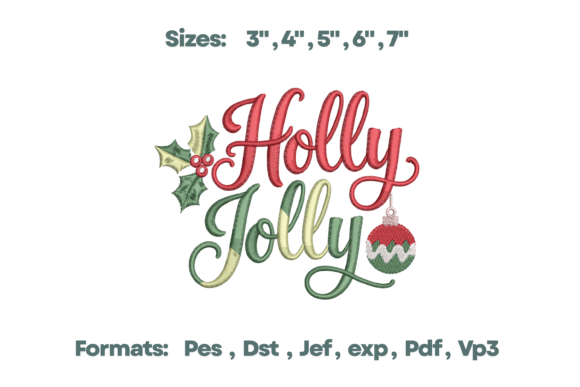
When I first opened the Holly Jolly Ornament Script Embroidery file, I was looking at it through the lens of a production designer, not just a holiday enthusiast. My clients are small business owners who need their branded merchandise to feel intentional, not slapped together. This design promises a multi-colored script greeting with a classic holiday feel, and my first impression is that it leans friendly and decorative rather than strictly professional. The word "Holly" appears in a separate color treatment, which immediately signals that this is a design built for visual pop rather than subtle branding. For a café, bakery, or boutique that wants to sell limited-run holiday merchandise, that can be exactly the right energy. But for a business that needs to maintain a serious or minimalist brand identity, this design may feel too playful. The script is stylish and energetic, but it does not whisper elegance. It announces itself, which makes it a solid choice for retail floor staff, event pop-ups, and seasonal gift items where approachability matters more than formality.
First Look at Business Fit
Holly Jolly Ornament Script Embroidery sits firmly in the decorative Christmas category, and that placement tells me the target is primarily seasonal merchandise rather than year-round uniforms. That is not a downside. Many small businesses build significant revenue around holiday product drops, and having a dedicated embroidery file for that purpose saves design time and ensures consistency across items. The multi-colored script treatment means the design already has a built-in color story, which reduces the guesswork for a shop owner who may not have a graphic design background. However, it also means the thread colors are predetermined to some extent. If a business uses a strict two-color palette for all branded goods, this design may require adaptation. The script itself is bold enough to hold its own on a tote bag or apron front, but the ornament element in the title suggests there may be a decorative shape or frame involved. If that ornament geometry is dense, it will affect stitch count and sew-out time, which matters for production runs.
How This Design Performs on Real Merchandise
I have tested similar script-based holiday designs on a range of substrates, and I can project how Holly Jolly Ornament Script Embroidery will behave in actual production. On an embroidered patch, the multi-colored script creates a premium, collectible feel. Patches with multiple thread colors tend to sell well because customers perceive them as higher value. For a small business selling patches as add-on items or customer gifts, this design would stand out on a retail counter. On custom apparel like work shirts or hoodies, the design works best as a chest logo accent or left chest placement. The script is readable at moderate size, but I would not recommend shrinking it below a certain threshold because the fine details in the multi-colored lettering could blur together, especially on textured fabrics like fleece or terry.
For cap embroidery, this is where caution is necessary. Cap fronts have a curved, limited sewing field, and a multi-colored script with ornament details may require careful digitizing to avoid registration shifts. If the ornament element includes small inner details, those may not stitch cleanly on a cap. I would recommend testing Holly Jolly Ornament Script Embroidery on a cap mockup before committing to a production run. On tote bag design, the story is better. Tote bags offer a flat, stable surface, and the design can be scaled up to take advantage of the larger canvas. A bold script on a tote bag becomes a walking advertisement for the business, especially during the holiday season when shoppers are looking for giftable merchandise.
For apron embroidery, this design is a natural fit. Cafés, bakeries, and florists often use aprons as both uniform and merchandise. The friendly, celebratory tone of the script matches the warm, handmade atmosphere these businesses cultivate. I would place it on the front bib or lower corner, depending on the apron style. The multi-colored thread will show up well on lighter fabric, but on dark aprons, you will want to ensure the thread colors have enough contrast to remain legible from a conversational distance.
Where to Exercise Caution
Every design has its sweet spot, and Holly Jolly Ornament Script Embroidery is no exception. I have seen too many small businesses buy a beautiful digital file and then try to force it onto every product regardless of size or surface constraints. Here is where I would apply careful thought with this design.
- Small patch sizes: If you plan to produce patches smaller than about three inches in width, the script details may become muddied. The multi-colored treatment relies on distinct color blocks, and at small scale those blocks can bleed into each other visually. Always test at your intended patch size before ordering a bulk run.
- Cap fronts: As mentioned, curved surfaces challenge multi-colored designs. The ornament element, if it includes circular or curved outlines, may distort on a cap seam. I recommend a test sew on an actual cap, not just a flat hoop sample.
- Tiny lettering on textured fabric: If your uniform fabric is piqué knit, fleece, or any high-texture material, the script may lose crispness. The finer the letter detail, the more likely it is to sink into the fabric nap. Use a dense, stable fabric like twill or performance weave for best results.
- High stitch density areas: Multi-colored scripts often have overlapping or tightly packed stitches where colors transition. If the ornament shape includes fill stitching, density could be high enough to cause puckering on lightweight fabrics. Use a quality stabilizer and consider a medium-weight cutaway for long-term wear.
- Frequent washing: Items like bar aprons or staff uniforms that require daily washing will test the durability of any embroidery. Ensure thread colors are colorfast and that the backing is fully removed to avoid fraying. A multi-colored design with many thread changes has more potential failure points than a single-color logo.
Brand Identity and Customer Perception
Let me speak directly to the business owner reading this. When you choose a machine embroidery design for your branded merchandise, you are making a statement about your values. Holly Jolly Ornament Script Embroidery communicates approachability, seasonal warmth, and a handmade aesthetic. If your brand identity is built around being the cozy neighborhood spot, the cheerful florist, or the bakery that feels like home, this design reinforces that message effectively. Customers who see this design on an apron or tote bag will associate your business with festive energy and personal attention.
However, if your brand identity relies on minimalism, luxury, or industrial edge, this design may feel mismatched. A high-end boutique or a modern creative studio might find the multi-colored script too busy for their visual language. In those cases, the design could still work as limited-edition holiday merchandise, but I would not use it as a permanent staff uniform element. The key is alignment. Your customers notice consistency. A design that feels off-brand, even if it is beautiful, can dilute the product value you have worked to build.
For handmade product sellers on Etsy or at craft fairs, this design is a strong asset. It reads as crafted rather than mass-produced, which is exactly the impression you want when selling artisanal goods. Pair it with natural fabric colors and minimal packaging for a cohesive look. If you sell digital embroidery file products yourself, this design would appeal to buyers looking for a ready-to-use holiday option that does not require additional digitizing work.
Practical Notes from an Embroidery Designer
Before you take Holly Jolly Ornament Script Embroidery into production, here is my checklist based on years of commercial work.
- Test in black and white first. Print the design at actual sew-out size on plain paper. Look at the negative space and letter spacing. If the script looks cramped or the ornament shape feels unbalanced on paper, it will likely need digitizing adjustments before embroidery.
- Check the file format compatibility. Confirm that the embroidery file you received works with your machine. Common formats include PES, DST, EXP, and JEF. If you are sending the file to a contract embroiderer, ask what format they prefer. Do not assume universal compatibility.
- Review thread color contrast. The multi-colored script relies on color separation for its effect. On a white or cream fabric, most thread colors will show clearly. On navy, black, or deep red, some colors may disappear. Lay your chosen thread spools against the actual fabric before stitching a sample.
- Inspect spacing and underlay. Multi-colored designs often require good underlay stitching to prevent fabric from peeking through at color boundaries. If the design does not include adequate underlay, you may need to add it during digitizing or use a heavier stabilizer to compensate.
- Confirm hoop size. The design may require a specific hoop dimension. If you are using a home machine, check that your hoop can accommodate the full design without re-hooping. Re-hooping multi-colored files can cause registration errors that ruin the color separation.
- Test on real fabric. Do not skip this step. A test sew on the exact fabric you plan to use will reveal thread breaks, tension issues, and color blending problems that a paper printout cannot show. Run one full sew-out and inspect the back for nesting or loose threads.
- Create a printable mockup for client approval. If you are producing merchandise for a client, show them a realistic mockup before production. Use a printable mockup that places the design on a garment or tote image. This builds trust and prevents costly rework.
- Compare beside other design assets. Place the embroidery next to your existing logos, labels, and packaging. Does it look like it belongs to the same brand? If not, consider using it only for standalone holiday items rather than permanent branding.
- Confirm commercial licensing. Before using any digital embroidery file for business merchandise, verify that your purchase includes commercial use rights. Many designers allow physical product sales but restrict digital redistribution. Read the license terms carefully.
- Plan for production speed. Multi-colored designs take longer to sew because of thread changes. If you are producing a large order, factor in additional machine time. A single-color design may sew in three minutes, while a multi-color script could take eight to ten minutes depending on stitch count.
Final Thoughts on Business Use
Holly Jolly Ornament Script Embroidery is a design I would recommend for seasonal small business merch runs, especially in settings where warmth and handcrafted appeal are part of the brand story. It works well on aprons, tote bags, patches, and chest-level apparel placements. I would be more cautious with caps, tiny items, and high-texture fabrics. The multi-colored script gives it a festive, premium feel that customers notice, and that can translate into stronger sales for holiday product lines. As with any machine embroidery design, the final result depends on your fabric choice, stabilizer, hoop size, and thread selection. Take the time to test before you commit to volume, and you will have a finished product that supports your brand identity and delights your customers. For a small business looking to add a seasonal accent to their lineup without reinventing their visual system, this design offers a solid, ready-to-use option. Use it where it fits, test it where it doesn't, and let the holiday spirit carry the rest.