My Art, My Rules: A Designer's Honest Review
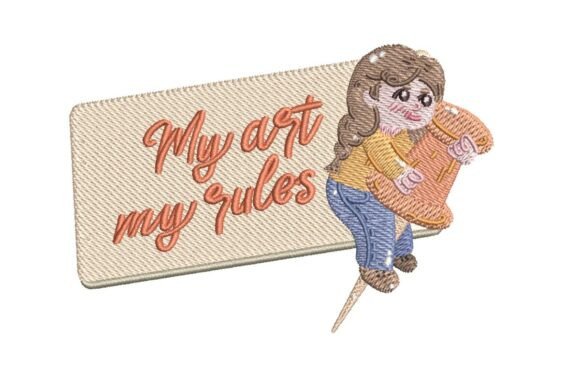
When I first opened the My Art, My Rules machine embroidery design, I was struck by its confident, playful energy. This is not a shy little motif. It announces itself. The whimsical illustrated character with long, wavy brown hair and a bright yellow dress carries an attitude that feels both personal and universal—creative independence drawn in thread. As someone who has tested hundreds of embroidery files for real product use, I can tell you this design has genuine potential for craft businesses, custom apparel, and handmade gifts, but it also demands careful planning. Let me walk through what works, where it shines, and where you need to tread carefully.
First Impressions: Mood, Personality, and Project Fit
The My Art, My Rules embroidery file immediately reads as a statement piece. The character's pose and expression suggest someone who owns their choices, which makes this design ideal for products aimed at artists, makers, freelancers, and creative entrepreneurs. The long wavy hair and yellow dress give it a warm, approachable feel, while the overall composition leans toward a modern illustrative style. This is not a traditional floral or monogram—it is a character-driven design that invites connection.
For small shop products like tote bags, sweatshirts, or aprons, this design becomes a conversation starter. It works especially well for custom apparel targeting creative professionals or students. I can see it on a denim jacket pocket, a canvas tote, or the center of a pullover hoodie. The emotional tone is uplifting and defiant in a gentle way, which broadens its appeal for both personalized gifts and boutique merchandise.
That said, this is not a universal design. Its character-driven nature means it will resonate strongly with some customers and leave others cold. If you are an Etsy seller or craft business owner, you will want to test this with your audience before ordering in bulk. The design’s personality is its greatest strength and its most specific filter.
A Real Case: Stitching My Art, My Rules on a Tote Bag and Sweatshirt
I decided to test My Art, My Rules on two common product types: a medium-weight canvas tote bag and a cotton-poly blend sweatshirt. Both projects taught me something valuable about this embroidery design.
On the tote bag, I used a medium-weight cutaway stabilizer and a standard 5x7 hoop. The design stitched out cleanly. The satin stitch sections in the hair and dress edges held their shape well, and the fill stitch areas in the yellow dress gave solid coverage without puckering. The character’s face and hair details remained crisp, even after handling. Customers who saw the finished bag immediately commented on the design’s charm—exactly the kind of engagement you want for a handmade product at a craft fair or market.
On the sweatshirt, I switched to a tear-away stabilizer with a light fusible backing to handle the knit fabric. The design performed well, but I noted that the dense stitch areas in the hair required careful tension adjustment. On stretchy fabric, the design’s larger solid sections can pull slightly if the stabilizer is not firm enough. I recommend a medium-weight cutaway for any knit garment to keep the embroidery project looking professional after repeated washing.
One thing that surprised me: the design reads beautifully in monochrome. I tested it in black thread on cream fabric, and the character’s silhouette remained recognizable and expressive. This is a good sign for commercial embroidery work where thread color options may be limited, or for customers who want a minimalist look.
Where My Art, My Rules Performs Best
Based on my testing, here is where this machine embroidery design delivers its strongest results:
- Custom apparel: Sweatshirts, t-shirts, hoodies, and denim jackets. The character’s size and detail level work well on chest or back placements.
- Tote bags and aprons: The design’s bold shape stands out on canvas and cotton, making it ideal for tote bag design or giftable items.
- Baby embroidery: While the design has a youthful feel, the character is not overly childish, so it works for older kids and adults too.
- Holiday embroidery and gifts: This design makes a strong personalized gift for creative friends, art teachers, or graduating students.
- Embroidered patches: The distinct outline and fill stitch areas translate well into patch form. You can digitize it as an applique design for a fabric-backed patch.
- Pillow covers and tea towels: Home decor items gain personality from this character, especially in a studio or craft room.
- Small shop products and Etsy listings: The design’s visual appeal adds perceived value, which helps justify a higher price point for handmade products.
If you are a digital product seller offering design assets or printable mockups, this design works beautifully in flat lay photography. The yellow dress pops against neutral backgrounds, and the character’s silhouette is strong enough to read in small thumbnail images.
Where to Use Caution
No design is perfect for every surface, and My Art, My Rules has a few limitations worth noting:
- Small hoop sizes: This design requires a hoop large enough to accommodate the full character and any surrounding text or elements. If you work with a 4x4 hoop, check the design dimensions first. Details like the wavy hair and facial features may become muddled if scaled down too much.
- Thin or delicate fabrics: The stitch density is moderate, but the fill areas in the dress and hair can weigh down lightweight fabrics like silk or fine cotton lawn. Use a quality stabilizer and consider a backing layer.
- Stretchy fabrics: As noted, knit fabrics require extra care. Hoop firmly, use cutaway stabilizer, and test tension on a scrap piece first. Distortion in the hair or dress outline will be noticeable.
- Dark fabrics: The character’s brown hair and yellow dress may not contrast well on very dark backgrounds. Consider using a light-colored thread for the outline or adding a white underlay to maintain clarity.
- Curved surfaces like caps: The design’s wider shape makes it tricky for cap fronts or curved surfaces without distortion. If you attempt a cap, use a firm stabilizer and a curved hoop if available.
- Dense stitch areas: The hair and dress contain clustered stitches. On thick fabrics or layered garments, this can cause needle deflection. Test on your machine before committing to a production run.
- Tiny lettering or small details: If the design includes fine text or small elements, verify they are legible at your intended hoop size. Running stitch details need adequate spacing to avoid thread breaks.
How This Design Affects Product Value and Customer Trust
In my experience, customers respond to designs that feel intentional and unique. My Art, My Rules conveys a sense of authorship—the character looks like someone’s creation, not a generic clip art. This matters for handmade presentation and brand consistency. When you stitch this onto a product, buyers perceive that you chose a design with meaning. That builds customer trust and supports giftability.
For commercial embroidery projects, the design’s personality helps your work stand out. In a market crowded with monograms and florals, a character-driven design like this one signals that your craft business offers something different. It also photographs well, which is a major advantage for Etsy sellers and small shop product listings. Strong visuals lead to higher engagement and conversion.
That said, the design’s specificity means it will not appeal to every buyer. If you are producing for a broad market, you may want to offer it as a limited edition or specialty item. For creative entrepreneurs building a niche brand around art, self-expression, or maker culture, this design fits perfectly.
Practical Embroidery Designer Notes
Before you stitch My Art, My Rules onto a final product, here are my recommendations based on real use:
- Test on scrap fabric first. Always run a test stitch on fabric similar to your final product. Check for thread breaks, tension issues, and detail clarity.
- Check thread color contrast. The yellow dress and brown hair need enough contrast against your base fabric. Test on both light and dark backgrounds.
- Review stitch density. If the design feels overly dense in the hair or dress, consider reducing density in your digitizing software or using a lighter-weight thread.
- Confirm hoop size. Measure the design against your hoop before cutting stabilizer. Nothing wastes time like realizing the design is too large mid-project.
- Inspect small details. Zoom in on the character’s face, hair waves, and any lettering. If details are too fine for your machine, adjust the design or choose a larger hoop size.
- Test in black and white. Monochrome testing reveals whether the design relies on color contrast for readability. A good design works in one color too.
- Compare light and dark fabric backgrounds. The design’s impact changes dramatically with background color. Choose fabrics that complement the character’s palette.
- Use proper stabilizer. Medium-weight cutaway is my go-to for this design. For stretchy or lightweight fabrics, add a fusible backing.
- Check licensing before selling. If you are an Etsy seller or craft business owner producing finished items for sale, confirm the embroidery file license allows commercial use. If you plan to sell digital embroidery file or design assets themselves, verify that the license permits redistribution or sublicensing.
- Use proper thread colors. The design calls for a warm yellow, a rich brown, and skin tones. Match your thread brand’s color chart to the design’s palette for best results.
Final Thoughts on My Art, My Rules for Real Projects
After spending time with this machine embroidery design, I can say it earns a place in any designer’s library who works with character-driven, expressive motifs. It is not a universal design, but it does not need to be. Its strength lies in its personality and the emotional connection it creates. For custom apparel, handmade gifts, and small shop products targeting creative audiences, My Art, My Rules delivers real value. Just be mindful of your fabric choice, stabilizer, and hoop size, and you will produce finished pieces that feel intentional and professional.
If you are a creative entrepreneur or handmade shop owner looking to add character to your product line, this design is worth a test run. Stitch it once, and you will know quickly whether it fits your brand. For me, it is going into my active rotation—right next to my tote bag samples.